


our
climate
Malta's climate is typical of the Mediterranean and is strongly influenced by the sea. The Maltese Islands have a pleasantly sunny climate with a daily average of around 12 hours sunshine in summer going down to 5 to 6 hours in mid-winter. Summers are hot, dry and very sunny. Day-time temperatures in summer are often mitigated by cooling sea breezes. Spring and autumn are cooler, except when the occasional Scirocco wind from Africa brings unseasonally high temperatures and humidity. Winters are mild, with the occasional short cold spells brought about by the north and north-easterly winds from central Europe. Annual rainfall is low, averaging 568mm a year. Bathing in the sea is quite possible well into the ‘winter' months, and the peak beach season can last until mid- to late October.
our
language
The official languages of Malta are Maltese and English.
Maltese, a language of Semitic origin written in the Latin script, is the national language of Malta. Over the centuries, it has incorporated many words derived from English, Italian and French. Italian is also widely spoken.
Malti - The Maltese Language: The Maltese language is a source of fascination to both visitors and linguists. The Maltese speak a unique language, Malti, the only Semitic language written in Latin characters. Through the ages, many foreign words, particularly English and Italian, have become part of the language. English, which is also an official language, is widely and fluently spoken and is the language of international business.
Public
Holidays
Malta and Gozo have 14 annual Public Holidays. With the exception of Good Friday, whose date varies from year to year, every other public holiday is celebrated on a fixed day of the year. The dates are the following:
1st January - New Year's Day
10th February - St. Paul's Shipwreck
19th March - St. Joseph
31st March - Freedom Day
March / April - Good Friday
1st May - Labour Day
7th June - Sette Giugno
29th June - St. Peter and St. Paul
15th August - the Assumption of Our Lady
8th September - Feast of Our Lady of Victories
21st September - Independence Day
8th December - The Immaculate Conception
13th December - Republic Day
25th December - Christmas Day
Other
Miscellaneous
Driving
In Malta and Gozo, driving is on the left. There are speed limits of 80 km/h on the open road and 50 km/h in built-up areas, unless otherwise indicated on relevant road signs. If you intend to rent a car or drive in Malta, it is advisable to take out comprehensive insurance. National or international driving licences are accepted. For more information please see the Malta Highway Code.
Electricity
The electrical supply is 230 volts /- 10%.
The frequency of the supply is 50 hertz.
The three-pin rectangular plug system is used, as in Britain.
Adapters are very easy to find.
Water
Tap water is safe to drink throughout the Maltese Islands. Local and imported bottled mineral water is available from shops, supermarkets, restaurants and bars.
About Malta
The history of Malta is a long and colourful one dating back to the dawn of civilisation.
The Maltese Islands went through a golden Neolithic period, the remains of which are the mysterious temples dedicated to the goddess of fertility. Later on, the Phoenicians, the Carthaginians, the Romans and the Byzantines, all left their traces on the Islands. In 60 A.D. St. Paul was shipwrecked on the island while on his way to Rome and brought Christianity to Malta. The Arabs conquered the islands in 870 A.D. and left an important mark on the language of the Maltese. Until 1530 Malta was an extension of Sicily: The Normans, the Aragonese and other conquerors who ruled over Sicily also governed the Maltese Islands. It was Charles V who bequeathed Malta to the Sovereign Military Order of St. John of Jerusalem who ruled over Malta from 1530 to 1798. The Knights took Malta through a new golden age, making it a key player in the cultural scene of 17th and 18th century Europe. The artistic and cultural lives of the Maltese Islands were injected with the presence of artists such as Caravaggio, Mattia Preti and Favray who were commissioned by the Knights to embellish churches, palaces and auberges. In 1798, Napoleon Bonaparte took over Malta from the Knights on his way to Egypt. The French presence on the islands was short lived, as the English, who were requested by the Maltese to help them against the French, blockaded the islands in 1800. British rule in Malta lasted until 1964 when Malta became independent. The Maltese adapted the British system of administration, education and legislation.
Modern Malta became a Republic in 1974 and joined the European Union in May 2004.
SCHENGEN Visa
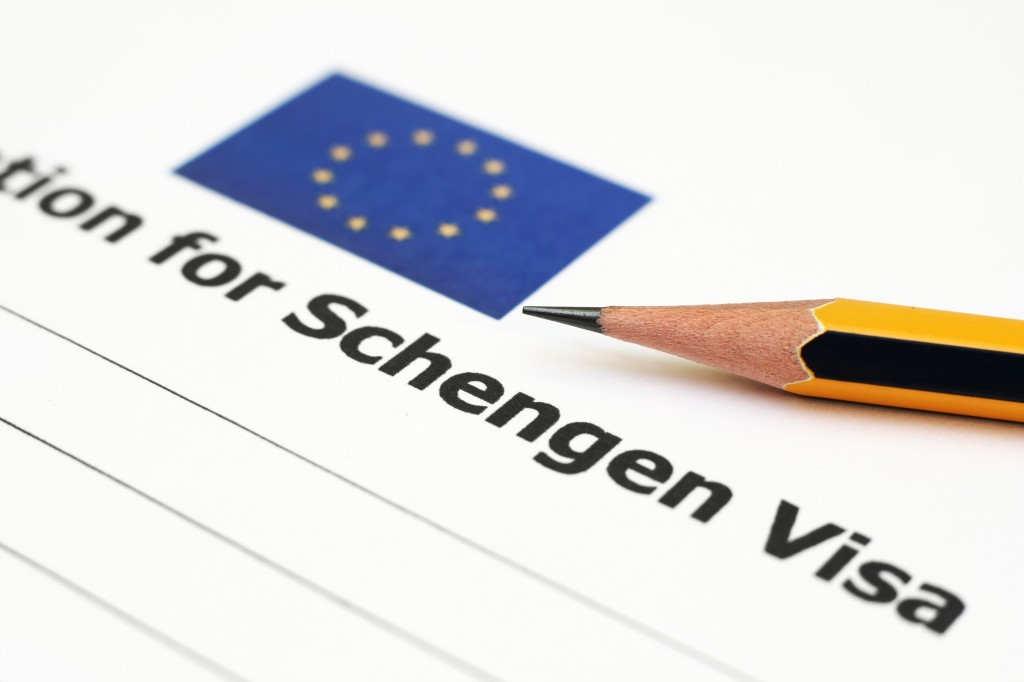
Procedure of Getting Entry Visas to Malta
The procedure for obtaining an entry visa to Malta as of November 2008 is the same for all nationalities requesting a visa to enter Malta. A visa is issued in Moscow at the Visa centre, Located at Shipok Street, Block 1, Apt 1. The whole procedure takes between 7-10 working days after the date of submission.
List of required documents for obtaining visa for adults:
1. The application form, filled-in in English using block letters and signed by the applicant. If the visa is for a minor, in that case the parents or guardian should sign. It is necessary to provide copies of the passport.
2. A passport valid for at least 3 months after the expiry of the visa and containing at least two blank pages.
3. Photocopy of the passport, where the personal details are listed. Empty pages need not be photocopied.
4. Two recent colour photographs (3.5cm x 4.5cm) with a light background. If the person is travelling for educational reasons, then they will need four coloured photographs.
5. The original and a photocopy of the applicant’s travel insurance, which should be valid for the Schengen zone and covers the entire period of stay. The insurance should cover any incident while in Malta or passing through any other Schengen area. The minimum insurance coverage is that of €30, 000.00 or the equivalent amount in foreign currency.
6. Proof of financial stability, which is confirmation from the bank on the availability of sufficient funds for the duration of the trip at a rate of €50.00 per day, or the equivalent amount in foreign currency. This could be either a certificate of purchase of foreign currency, a certificate of availability of funds in an international credit card or a statement showing the availability of funds from a sponsor, which should be accompanied by an invitation letter dated and signed by said sponsor, as well as a copy of the sponsor’s passport.
7. Original and photocopy of roundtrip airline ticket
8. Confirmation of accommodation: This can be in the form of a voucher provided by Leisure 1st Limited which indicates the location in Malta, and in the case of an educational trip details such as school and course will also be listed.
9. Copy of the internal passport: pages concerning the applicant's biodata and registration in Russia.
10. Power of attorney if not attending in person.
11. Agreement on processing personal data (if applying at the Visa Centre).
The cost of the visa, including a consular fee for the citizens of Russia, Ukraine: €35.00, Belarus: €30.00, for citizens of other countries €60.00.
List of Required Document for registration of Minor Educational Visa (up till 18 years):
1. The application form, filled-in in English block letters and signed by the
parent/guardian of the child.
2. A copy of the first page of the passport of Russian parents who signed the form. If the child and the parent who signed have different family names, a birth certificate should be provided. In the case that a guardian should sign, a certificate of guardianship should be presented also.
3. A copy of the birth certificate of the minor, and photocopies of passports for students over 14 years.
4. A passport valid for at least 3 months after the expiry of the visa, containing at least two blank pages.
5. Four recent colour photographs (3.5cm x 4.5cm) on a light background.
6. Sponsor letter from parents, paying for the trip.
7. Proof of financial stability of parent or legal guardian: either a certificate/receipt from the bank when buying foreign currency at a rate of €50.00 per person per day during their stay in Malta, or a statement/letter from the bank indicating the available amount on an international credit card.
8. Letter of reference from school which indicates the child’s name, class and school address.
9. Notarized consent form from the parents of the child indicating permission for the child to travel independently abroad out of the Russian Federation and into the Schengen zone for the duration of the educational period specified in the application form.
10. Power of attorney if not attending in person, completed and signed by a parent or guardian.